
Feature
THE GOOD FIGHT
Audrey Kurth Cronin (1981)
Audrey Kurth Cronin (1981), the Trustees Professor of Security and Technology and Director of the Carnegie Mellon Institute for Strategy & Technology (CMIST), shares insights into the complex world of counterterrorism. Cronin spoke with us about her work, from understanding the psychology behind extremism to innovative strategies for undermining terrorist organizations, and the ongoing battle to prevent the rise (and speed the demise) of terrorist campaigns.
How did your Marshall Scholarship lead to what you are doing today?
My Oxford professors taught me how to research, write, speak, and think analytically. I also learned how to recognize shallow arguments, take criticism, absorb what helps, and grow from it. In both government and academic settings, through sweeping geopolitical and technological changes, my focus has remained on international relations, strategy, security, and technology. And I try to make the world just a little bit better through my work. I also met my husband at Oxford, and we have been happily married for almost 40 years.
What caused you to go into the academic field of terrorism?
One thing that distinguishes me from many long-standing US terrorism experts is that I initially came to the field with a background on Russia rather than the Middle East. I arrived at Oxford having studied “propaganda of the deed” at Princeton and the impact of Narodnaya Volya’s killing of Tsar Alexander II in the Russian Revolution. My Oxford supervisor, Adam Roberts, was deeply knowledgeable about terrorism. This was in the 1980s, during the London IRA bombings. I narrowly missed being a victim of the bombing of Harrods, then experienced a middle-of-the-night bomb threat and evacuation of our St. Antony’s student house. I wanted to understand why small groups would deliberately target civilians for political ends, even as my main international relations coursework focused on war and major powers.
The topic of my Oxford dissertation and of my first book was the four-power negotiations over Austria following the Second World War. That interest led to a focus on Afghanistan, which I followed through the 1990s, shifting my focus from great-power politics to the mujahideen, the rise of Al Qaeda, Osama bin Laden, and global terrorism.
Does your work focus on terrorists or terrorism?
I focus on all aspects of terrorism, including individual terrorist leaders, terrorist groups, the history of terrorism, technologies of terrorism, domestic terrorism, and global terrorism. Over the decades, I believe I’ve analyzed every aspect of both terrorists and terrorism— though if our readers think I’ve missed something, I’ll be happy to tackle it next.
How do you define terrorism?
At a minimum, terrorism has four characteristics: a fundamentally political nature, the symbolic use of violence directed at an audience, purposeful targeting of noncombatants, [and being] carried out by nonstate actors. Thus, my definition is: Terrorism is the use or threat of violence by nonstate actors against noncombatants for a political end. Note that there is no perfect definition of terrorism. It’s a term like war or sovereignty that does not have a global consensus, and I don’t have a problem with ambiguity. Some people argue that terrorism cannot be defined; the families of terrorism victims know what it is. Also, many people argue that states can be terrorists. I sympathize with that view. But state use of force is subject to international norms and conventions with an extended vocabulary that can at least be invoked— crimes against humanity, violations of the laws of war, genocide, and so on. That is not so with nonstate uses of force that exceed the reach of domestic law enforcement.
Is your work theoretical and academic? Or do you, for instance, travel to places where terrorism is a threat and seek to put an end to that threat? Do you advise governments about how to prevent or respond to such attacks?
I do both, and have served in both government and academic posts. Much of my policy work is not publicly available, so the academic work is better known. But academic theoretical work can be insufficient if unaccompanied by practical knowledge and implementable solutions.
I have traveled to many places where terrorism is a current threat and tried to put an end to it. When I was on the faculty of the US National War College, for example, I did field studies in India, Pakistan, Algeria, Tunisia, Colombia, Mexico, Saudi Arabia, and Turkey. As a teenager, I lived in the American Embassy in Moscow where my dad was the naval attaché, then the defense attaché, and returned later for US and Russian Academies of Sciences meetings on reducing the threat of nuclear and radiological terrorism. I was also an advisor to the Independent Monitoring Commission on Peace in Northern Ireland in Belfast. Most recently, I’ve focused on how to effectively end Hamas’s terrorism. That’s just a sampling of the practical work I’ve done seeking to put an end to terrorist campaigns and terrorist threats.
In terms of advising governments, I was the Specialist on Terrorism in the Congressional Research Service in the aftermath of the September 11th attacks. When I arrived, the members and their staffs were still grappling with the anthrax attacks, which were the subject of my first public report for Congress. I’ve advised other US government organizations as well.
Another theme of my work is advising against classic mistakes governments make in responding to provocative terrorist attacks emotionally instead of strategically. In democracies especially, terrorist attacks have often accelerated military repression or led to deep domestic polarization. When that happens, everyone loses.
There are so many aspects to this topic: psychology, economics, politics, war. How do you take all these factors into consideration?
No expert can focus equally on everything. I look at terrorist campaigns comparatively and find the parallels in their recruitment, structures, tactics, targets, motivations, and innovations. Every campaign has an historic arc. I’m good at understanding how to drive a campaign toward its end by avoiding predictable mistakes. Governments have sometimes found that helpful.
My strength is in building frameworks that can guide counterterrorist responses. In my book How Terrorism Ends for example, I studied some 457 groups and discovered six patterns in how they end: decapitation, i.e., capturing or killing the leader; negotiations; success; failure; military repression; or reorientation to another form of violence, such as insurgency or criminality. The secret to effective counterterrorism is to find which pattern or patterns suit any given group, and then work synergistically with that pathway to its demise. Above all, governments must not respond in a way that engenders more sympathy for the terrorists.
Do you make a distinction between domestic and international terrorism?
The domestic and international phenomena are increasingly blurred, with terrorist groups having more global ties than ever via our various forms of digital andlegacy communication.
In the United States, what’s distinct is the legal regimes for responding to either domestic or international terrorism: Intelligence agencies such as the CIA, DIA, and NSA handle international terrorism, while the FBI, Homeland Security, and other law enforcement agencies handle domestic terrorism. International terrorism is less threatening than in earlier decades, because international counterterrorism intelligence cooperation with our allies and partners is better than it used to be. We also have new ways to share between agencies doing different types of intelligence, such as signals, or human or imagery intelligence. And machine-learning tools can help organizations sort through massive amounts of data.
On the other hand, the threat of domestic terrorism, especially extreme right-wing terrorism but also far left-wing terrorism, is resurging within the United States. The legal regime to prevent it while protecting the rights of American citizens is more controversial and complex. Domestic US terrorism is a serious worry.
What is the impact of technology and of social media on terrorism?
What to do about terrorist use of social media is an important problem. Social media platforms such as Twitter, now X, had put in place safety protocols and hired thousands of moderators to flag and remove dangerous content, but these measures have been cut back. Some authoritarian countries simply cut off access to social media altogether, but that is a form of state censorship that strengthens surveillance and population control. Remember, social media can also be an avenue for constructive dissent.
In Western countries, the onus is now mostly on the consumers of that content, and to a lesser extent, their governments. Finding the right solution is a profound governance question for the 21st century.
How do you keep equilibrium in the face of the terrible things you know people can do?
That is an excellent question. It’s the hardest thing about studying terrorism, because I’m often consulted in the aftermath of horrible events. Some terrorism experts become inured to the violence, even reflexively sensationalize it, but I refuse to do that. I keep my equilibrium by advancing historically proven strategies to end it.
What is the one most important thing you would like readers to know about terrorism?
Every terrorist campaign eventually ends. The secret to wise counterterrorism is to understand how it will end, then work with that dynamic to accelerate its demise.
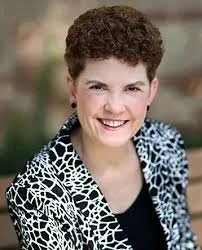
Audrey Kurth Cronin was a Marshall Scholar at St. Antony’s College, Oxford University, 1981-1984, earning
both MPhil and DPhil degrees in international relations. She is currently the Trustees Professor of Security and Technology at Carnegie Mellon University and Director of the Carnegie Mellon Institute for Strategy & Technology.