Feature
THE Prediction Problem
John Jumper (2007)
Predicting the structure of proteins has long stumped scientists, but when John Jumper joined an AI startup called DeepMind, he and his team created a model that could identify protein structures quickly. As a result, new avenues opened for scientists working on everything from drug discovery to food chemistry, and Jumper took home the Nobel Prize in Chemistry.
John Jumper (2007) has always cared about doing impactful work with his life.
“It was very, very important to me that what I did eight hours a day didn’t just make enough money to support my family, but that it also contributed to the world and contributed to building human knowledge,” he says today.
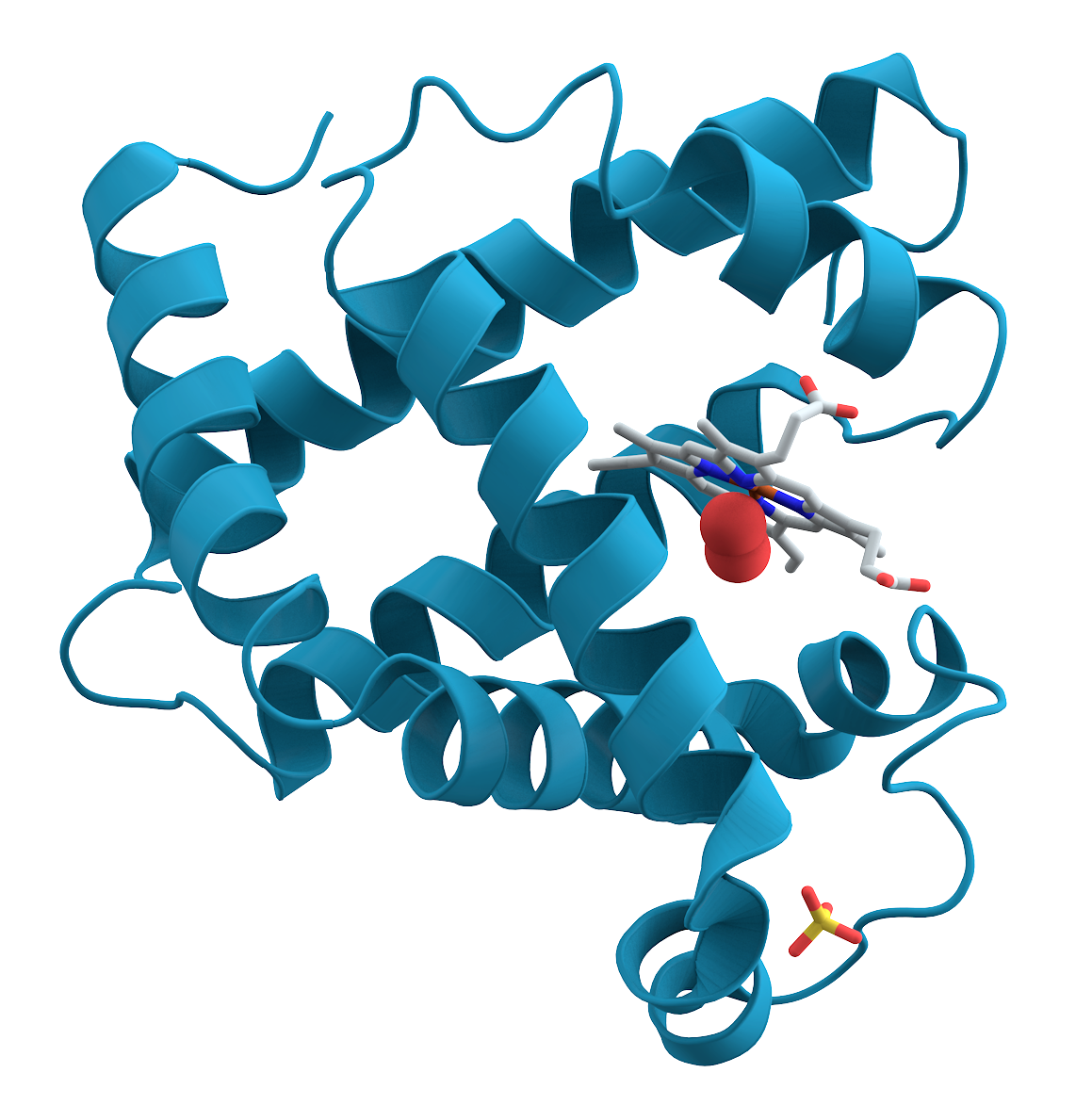
As a scientist, Jumper has focused his career on a specific grand challenge: protein structure prediction. Proteins are the key building blocks of biology, enabling our bodies to stay healthy and stave off disease, as well as keep the living environment alive.
Protein function depends on taking on a particular 3D orientation called structure. Malformed proteins can cause disease and death, while correctly structured proteins enable all of life. Jumper’s contribution to science has been to enable rapid prediction of a protein’s structure, a problem that has eluded scientists for nearly half a century. Characterizing the structure of a protein experimentally can take years of painstaking manual work, so the ability to quickly predict structures has transformed biological sciences. In 2024, Jumper was co-awarded the Nobel Prize in Chemistry for his work on protein structure prediction.
However, his journey to becoming a Nobel Prize winner took many twists and turns.
Is there any money in doing that?
Jumper was born in Little Rock, Arkansas, to two engineers. His parents emphasized the importance of education and financial stability from early on. He recalls his mom telling him that if he “got As and Bs in school, then...everything else was my business. Once I wasn’t getting As and Bs, it was going to become her business.”
Jumper put this advice to work getting outstanding grades in every advanced placement and honors course available at his high school. Garry Sullivan, the head of his high school, said that “his curiosity and commitment to excellence...were evident during his upper school years.”
Jumper decided to study physics and math at Vanderbilt University, a decision that worried his pragmatically minded parents. He remembers them asking, “Is there any money in doing that?”
To assuage his parents’ concerns, he applied for and received a full-ride scholarship. It was this same pragmatism that led him to apply for the Marshall Scholarship to fund his graduate education.
Jumper enrolled at the University of Cambridge in 2007, supported by the Marshall Scholarship, to study for a PhD in condensed matter physics. While he was excited by the opportunity, he found it difficult to integrate into his college at Cambridge, the central social outlet for students.
Furthermore, he struggled with direction in his PhD. His research group was working on abstract theoretical physics problems that had little connection to the real world. “The only application was high-pressure hydrogen at the center of Jupiter,” he said. He recalled “being totally uninterested in what other people in the group were describing as the objectives of their research.”
So, after a year, he went to his advisor’s office and let him know that he had decided to leave the PhD program. At that point, Jumper was in the position that had concerned his parents. He recalled saying to himself, “I’m an unemployed physicist. What do I do?”
His answer was simple: “Apply for finance jobs.”
Connecting to experiments
Jumper soon landed a job at a company in New York City known for hiring physicists and mathematicians to do algorithmic trading. However, the firm did not put him in trading and instead assigned him to a group focused on basic scientific research.
It was there that Jumper was first exposed to the protein structure prediction problem. He learned how to do molecular dynamic simulations and created a new programming language designed specifically for protein structure prediction. He even was a co-author on an article in the prestigious journal Science.
Despite the research being interesting, he felt it lacked grounding. He asked himself, “Am I doing the things that are fun with no connection to how someone’s going to, you know, do a different experiment?”
This question pushed him to pursue that PhD. He enrolled in a lab at the University of Chicago, where he was co-supervised by an experimentalist and a theoretician. There, he felt he could see the tangible needs of experimentalists, and one problem continued to stand out. Protein structure prediction was inaccessible and not sufficiently accurate.
Jumper decided to write his PhD thesis on ways to accelerate molecular dynamics simulations for protein structure prediction. While he made significant strides, by the end of the PhD program, he felt his work still had not solved the protein structure prediction problem. It still took roughly a week and significant computational resources to make a prediction for a single protein. He knew there must be a better way.
Going Miles, Inch by Inch
In early 2016, Jumper heard that the AI startup DeepMind had quietly entered into protein structure prediction. He interviewed for a job in the London office and was hired.
DeepMind took a different approach to protein structure prediction. Instead of using molecular dynamics to simulate the movements of individual atoms of a protein, as Jumper had done in his previous work, the team at DeepMind aimed to simply take a set of letters representing the protein (the sequence) and some information about its evolutionary history to create an AI model that would directly predict the protein’s structure. This direct prediction approach had the potential to significantly accelerate protein structure prediction, giving outputs in minutes instead of days. However, it was not clear how to make direct prediction work from the outset.
Therefore, DeepMind’s CEO, Demis Hassabis, emphasized what Jumper called “leaderboard-driven development.” Jumper said that the team set a goal: “We want a system that is good across 100 novel proteins at this task.” They then created a leaderboard, where each new tweak to the AI model was tested against those 100 proteins and ranked against every previous model. Since the AI model could make predictions quickly, it was easy to rapidly test new ideas and see which ones worked.
Jumper found this type of development energizing. Instead of toiling away for years at a simulation that was too expensive to test robustly, he could see each day whether he was making progress towards the goal of improving protein structure prediction with real- time feedback. “[We were] going miles, inch by inch.”
In 2017, DeepMind made a submission to a competition for protein structure prediction. The competition required participants to make predictions about novel proteins that had not been released to the public. DeepMind’s AI model, which they called AlphaFold 1, surpassed every other submission by a significant margin, beating efforts by experts who had worked on protein structure prediction for decades. In a blog post reacting to the results, one expert wrote, “What just happened?”
Surprisingly, Jumper and his colleagues at DeepMind were not satisfied. At this point, Jumper was put in charge of the team, and he decided to restart their work from scratch in hopes of building something better. He found the responsibility nerve-racking at first. “I remember for a period of several months, we were kind of rebuilding the system and climbing upward, but it wasn’t better,” Jumper said. He recalled the day when they edged past the performance of AlphaFold 1: “It was a relief, because at this point, leadership was saying, You should really do well on this problem.”
In the coming months, the team made many incremental improvements, climbing up their own leaderboard. After many iterations, they made a submission to the next edition of the protein structure prediction competition and waited.
In December 2018, the results of the competition were released. DeepMind’s AlphaFold 2 not only surpassed all competitors by a large margin, but also madepredictions that were nearly indistinguishable from the results of actual experiments. Many experts declared protein structure prediction solved.
AlphaFold 2 has quickly become a popular tool among experimentalists, used for everything from drug discovery to food chemistry. At the time of this writing, the paper describing AlphaFold 2 has been cited over 32,000 times.
Today, even after winning the Nobel Prize, Jumper is a tireless researcher. His daily routine involves collaborative work in the office with the AlphaFold team, spending time with his family, and late nights reading and coding. While his Marshall Scholarship time in England was short, he sees himself staying with DeepMind in London for the foreseeable future.
He says he is still deeply motivated to make an impact on the world. When talking about his motivation to make rapid progress, he said, “Urgency is a choice. Urgency is about celebrating even slightly better metrics than you had previously...and I think it’s an opportunity.”
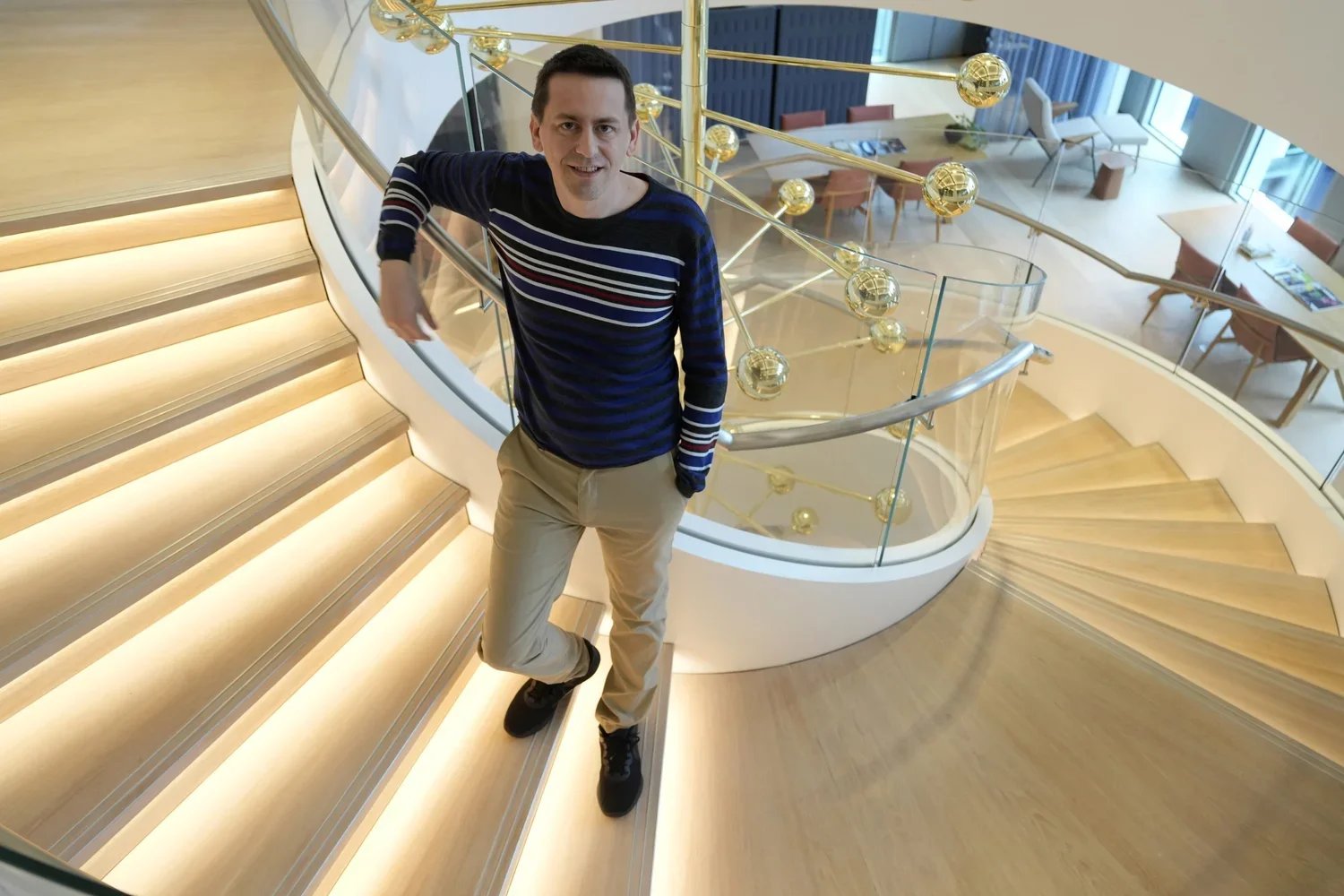
John Michael Jumper (Class of 2007, University of Cambridge) is an American chemist and computer scientist. He was co-awarded the 2024 Nobel Prize in Chemistry for protein structure prediction. Jumper currently serves as a Distinguished Scientist at Google DeepMind.