
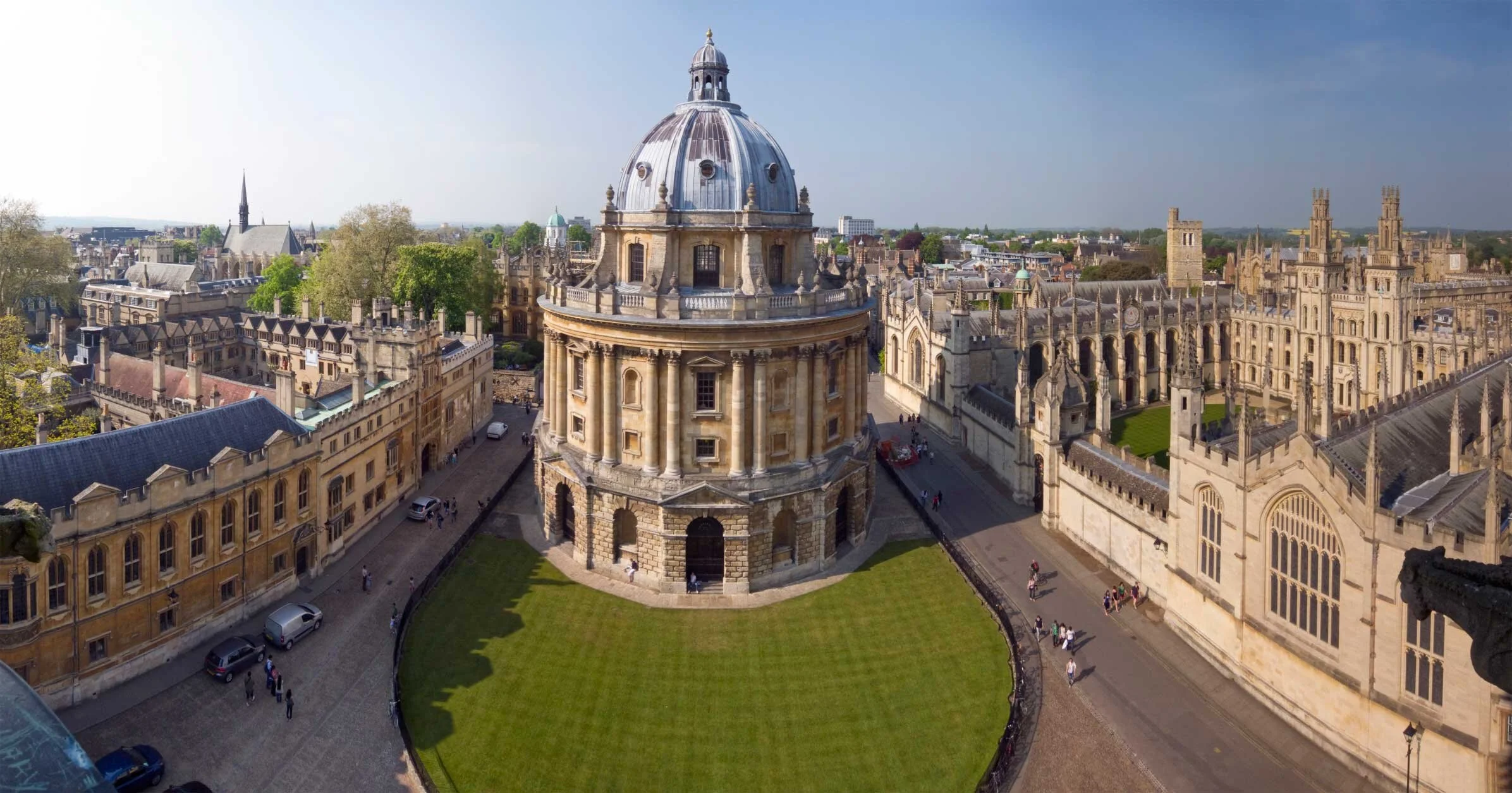
Feature
WHAT COULD YOU GIVE YOURSELF PERMISSION TO DO?
Bryan Leach (2000)
Entrepreneur Bryan Leach (2000) says the sky is the limit. He runs Ibotta, a publicly traded company operating in grocery store aisles leveraging the latest AI technologies. A former law partner and Supreme Court clerk, Leach changed careers in his mid-30s to become a tech founder, a decision deeply tied to his time at Oxford’s Magdalen College as a Marshall Scholar.
Bryan Leach (2000) runs meetings at his Denver-based tech company Ibotta like an Oxford tutorial.
“The way I operate in my company is basically the Oxford Socratic method,” he says. “I expect that people in my senior leadership team will be able to be askedquestions, to be pressed.” Leach, an entrepreneur whose original career path ran through Yale Law, a Supreme Court clerkship, and a prestigious law career and partnership, acknowledges that some might sweat a little under his particular approach.
“I don’t think of it as a cross-examination,” he explains. “But they have to be able to stand on their feet and explain their rationale for something the way thatsomebody would in an Oxford tutorial.”
Ibotta, which went public on the NYSE in the spring of 2024 and debuted with a market cap of over $3 billion, raising $660 million in its IPO, has been a huge success story for Leach and for his Denver-based team, as well as for American consumers.
Ibotta—as in, “I bought a bag of groceries”—originally began in 2011 as a cash-back rewards and rebates platform for grocery brands, and it has paid out well over $2 billion in rewards to savvy shoppers since then.
But Leach’s vision is a grander one: informed by his particular training at Oxford and anchored and supported by a network of Marshall Scholars and UK connections, his unconventional approach to entrepreneurship has positioned Ibotta at the cutting edge of how advertising works in the CPG (consumer pacakged goods) industry.
FOLLOWING UNCLE EDWARD
Everybody in the Leach family knew about Uncle Edward. It was sort of a family legend, really—the romantic figure who had gone to Oxford and tragically died far too young. It was a point of distinct pride in the Leach family, spread across the then-British Empire, that at least one member of the clan had been granted entry to the dreaming spires.
When Leach was in the eighth grade, a classmate’s father came to a school career day that changed everything. Robert McCallum, who would later go on to serve as associate attorney general and ambassador to Australia under President George W. Bush, was at that point in his career a rising star at the white shoe firm of Alston & Bird. To Leach, the fact that McCallum was a lawyer was only mildly more interesting than being someone else’s dad, but it turned out that McCallum had also been a Rhodes Scholar.
As McCallum clicked through slide after slide of Oxford, the Rad Cam, the Bodleian, Leach thought, This is how you do it. This is how you get there, this is how you do what Uncle Edward did.
In the same results-oriented reasoning style that would characterize his approach to business many years later, he worked backward from the desired outcome. Goal: Get to Oxford. How? Full-ride scholarship. How to do that? Apparently, a Rhodes Scholarship. Done.
Leach studied C.S. Lewis and J.R.R. Tolkien, read British fiction, and arrived at Harvard a few years later, more convinced than ever that for him, all roads (or indeed, Rhodes) led to Oxford. But the discovery of the Marshall Scholarship was a critical revelation. Leach was impressed by the origins of the scholarship being a gesture of thanks from the British to the United States, especially given his British/American roots.
“When I got to Harvard,” he recalls, “pretty much from day one, I thought about, Okay, how do I apply for those scholarships? Because I knew you had to get permission from your university. So I sort of worked backward from giving myself the best chance.”
ENTR’ACTE
Leach was selected as a Marshall Scholar in the class of 2000, and he arrived at Magdalen College, where he completed an MPhil in Economic and Social History. And how did Oxford measure up to the dream?
He describes his time at Magdalen as an almost idyllic interlude, a sort of deep breath between two high-pressure situations. It was almost like therapy, a chance to unwind from the pressure and stress of Harvard before enrolling at Yale Law School.
“For the first time,” Leach says, “I was able to find more balance. I was able to unpack some things that had happened in my life, and I was able to write, in an academic setting, about things that were personally important to me. It was basically reminding myself that you could learn for the love of learning again, instead of being such a strategist about the whole process.”
He acted in productions at the Burton Taylor Theatre (now the Burton Taylor Studio), an intimate and iconic black box theatre, performing contemporary new plays like Chilean playwright Ariel Dorfman’s 1990 Death and the Maiden. He rowed. He went to Wimbledon. He traveled. He began to develop a sense of self-awareness, spotting habits that had developed in his hard-charging approach to life that could ruffle feathers; he began building a greater emotional intelligence, especially to others from different backgrounds.
And perhaps most importantly, he had the freedom to meet other remarkable young people and to enjoy and appreciate them on their own terms.
Looking back, Leach points to those friendships as some of the most important of his life and his time at Oxford as an opportunity to realize the best version of himself.
DO QUIT YOUR DAY JOB
After Oxford, Leach plunged back right back into the role of the gunner, moving rapidly from Yale Law to a clerkship on the Second Circuit to the Supreme Court, where he clerked for Justice David Souter, who had also been a Magdalen man. He did all the right things, ticked every box, and chased every brass ring.
And it was fine, but Bryan was looking to create something more unique and long-lasting that would have a greater positive social impact. As a lawyer, he felt he was in a time-honored tradition but not much better at it than others in his field, and he wanted to do something that was uniquely possible at this moment in history.
So Bryan Leach quit his day job as a ridiculously successful lawyer to become a tech entrepreneur.
At this point in the story, it is very satisfying for us to know that it ends well—that his company became successful and has helped millions of Americans, revitalized the Denver tech and business scene, and buoyed local jobs and industries. But Leach, of course, didn’t know that. He had an idea for a sort of coupon-adjacent concept he was calling Zing, and, in his back pocket, a network of very clever, talented people who were good at encountering unfamiliar ideas, tearing them apart, assimilating large amounts of information, and coming up with good arguments.
Leach made some calls, got everyone to Denver, and convened a kitchen cabinet of Oxford, Marshall, and UK friends to come and talk through the idea with him.
These old Magdalen chums and Oxford poker buddies became his sounding board for questions like, Should I leave my law partnership? I’ve made partner at age 33 and would be taking a 5x pay cut to give up my career entirely—and to do a cash back grocery app? Does this even make sense when I have no idea about what this is?
“I needed some people to either talk me out of it or encourage me to do it,” says Leach.
Other conversations followed. Andrew Klaber (2004), another friend from the Marshall community, urged Leach to give it a try. Leach recalls, “I remember I picked [Klaber] up at the airport at midnight, and we talked about it for two or three hours. He was on his way to the Aspen Institute. I was extremely reluctant, and all I had was a one-pager, but he said, “No, you’ve got enough. You’ve got enough. Get out there, start speaking it into existence.”
“There was something about that conversation that was extremely important to me. It caused me to say, Okay, fine. I won’t just workshop this idea and whiteboard it with friends, but actually talk about it with Larry Sonsini and Reid Hoffman.”
And when it came time to fundraise and to take what was now Ibotta off the whiteboard and into reality, Marshalls were early investors and believers. Jeff Rosensweig (1979), who had served on Leach’s selection committee in Atlanta and awarded him the Marshall Scholarship, became a seed stage investor and rallied others to the cause. Robert Gray, OBE (1971), Wayne Lau (1979), and Meena Seshamani (1999) were just a few of Leach’s early investors. Other members of Leach’s Marshall and Oxford network became advisors, mentors, board members, and supporters
“I do believe,” says Leach, “that had I not gone to Oxford and not done the Marshall Scholarship, that Ibotta could not have gotten off the ground. It was the people that I met, their level of ambition and boldness, that encouraged me to start this company.”
THE FUTURE OF PERSONALIZED PROMOTIONS
From a grocery store cashback app, Leach has guided Ibotta to a revolutionary place in the market. Over the last decade, he and his team have leveraged the latest data science techniques and computer power to reimagine how companies market their products.
Leach sees a direct link between the company’s current trajectory and the work he did in economic history at Oxford. What Ibotta does, he argues, is a kind of economic experimentation.
His platform asks, how do you change a consumer’s behavior as cost effectively as possible? How might you use machine learning to look at someone’s entire history of purchases and identify the exact offer or promotion appropriate for that particular customer?
The Ibotta mobile app contributes less than a third of their revenue. The larger part of the business is
a network that delivers digital promotions for large retailers like Walmart, DoorDash, and Instacart. Leach and his company are helping companies rethink the way they promote everything they sell, using technology.
“That is really interesting to me as an economist and an economic historian,” says Leach, “because it’s the first time in human history where that kind of calculation can be made in a split second. Up-to-the-minute, up-to-the-second information about what I buy can inform the signal that is given to me to stretch me from purchase behavior that I would otherwise have made to inflect that in favor of a given product.”
“With technology and with AI and with purchase data, granular purchase data, you can actually figure out the elasticity of demand and loyalty of a consumer across all 50,000 products in a store, and deliver a much more efficient frontier of personalized promotions than has ever been possible.”
Ibotta’s approach starts at the other end of a transaction. Instead of learning about a consumer’s demographic characterisetics, they track actual behavior: What do you, specifically, buy, and at what prices, and under what conditions? Using machine learning, they are able to reveal sets of preferences and patterns of behavior to identify what actually results in a sale.
It’s a hugely complex ecosystem and mountain of data that would have been impossible even a few years ago, says Leach. Added to that, of course, is the additional technology and input from digital shelf tags, digital carts, and even a consumer’s digital shopping behavior.
Leach says that it’s about understanding what incentives change behavior.
“That kind of reimagined performance marketing paradigm is a holy grail for the CPG industry,” explains Leach. “For hundreds of years, it has been theorized and never done. And so I find that to be a cool application of AI that’s way more interesting than, say, Let me replace my ad copywriter with ChatGPT. This is a foundational change.”
RISK-TAKING AS PUBLIC SERVICE
Leach sees his road to entrepreneurship as a form of public service—just as valid, in his opinion, as the traditional pathways through government or public office. In his estimation, the private sector has the potential (not always realized, but the potential) to do tremendous good in the world.
“At Ibotta, we’ve employed 2,000 people who have had health care benefits, and more than 100 people made $1 million in our IPO. Many were early employees at Ibotta. People have used their experience at Ibotta to do all sorts of amazing things in their lives,” he says.
“We’ve also given away more than $2 billion to American consumers. That’s a form of service, a really valuable way to connect with people who are using that $2 billion on their rent, medical bills, educational debt and their food.”
For too long, he says, the private sector has been thought of by Marshall Scholars and the broader community as a narrow subset of finance or management consulting— Goldman Sachs, McKinsey. But the world of business and entrepreneurship, says Leach, is a much bigger, bolder, more creative one, one he wishes more Marshalls would pursue.
It’s also, Leach admits, a world that involves more risk: “The problem is it’s not a defined track. And the people who go to these scholarships have been straight-A students in high school. They got into great colleges. They were top of their class in college. They got the great scholarship.
“And they want to roll over that currency into something that holds that value. They don’t want to squander that by potentially taking a big risk starting a company. What if they fail? And it’s like, well, what have I done with all that pedigree? I could have turned that into the next rung getting into medical school, getting into law school, getting the clerkship, getting the partnership.”
Leach, reflecting on his own life, clearly understands this tension. He’s lived it. And the question that drove him, that he wants more Marshalls to ask, is, What can you give yourself permission to do?
“The world will have another investment banker, another management consultant, another lawyer, another doctor, and that’s great. We need people to do that,” he says.
“[But] I found that I could kind of break out of the categories that were being handed to me. You’re a member of a very small, elite group of people with a very strong network. You actually have a moral obligation to take more risk and be more creative.”
Leach still draws heavily on his time at Oxford, whether he’s pressing his employees on their ideas or pitching Ibotta to the CMO of Dollar General. It’s all storytelling, he believes, and requires a capacity to think on your feet, to analyze ideas, and to come back with something persuasive.
“It’s like The Karate Kid,” he says. “You’ve been learning all this karate, but nobody tells you you’ve been learning karate. So you think you are just learning how to sand the floor and paint the fence until someone says, You know, you actually have everything it takes to go be a really successful entrepreneur, not just a trial lawyer.”
“And you go, I do? Oh my gosh. Yeah, I guess that’s true.”
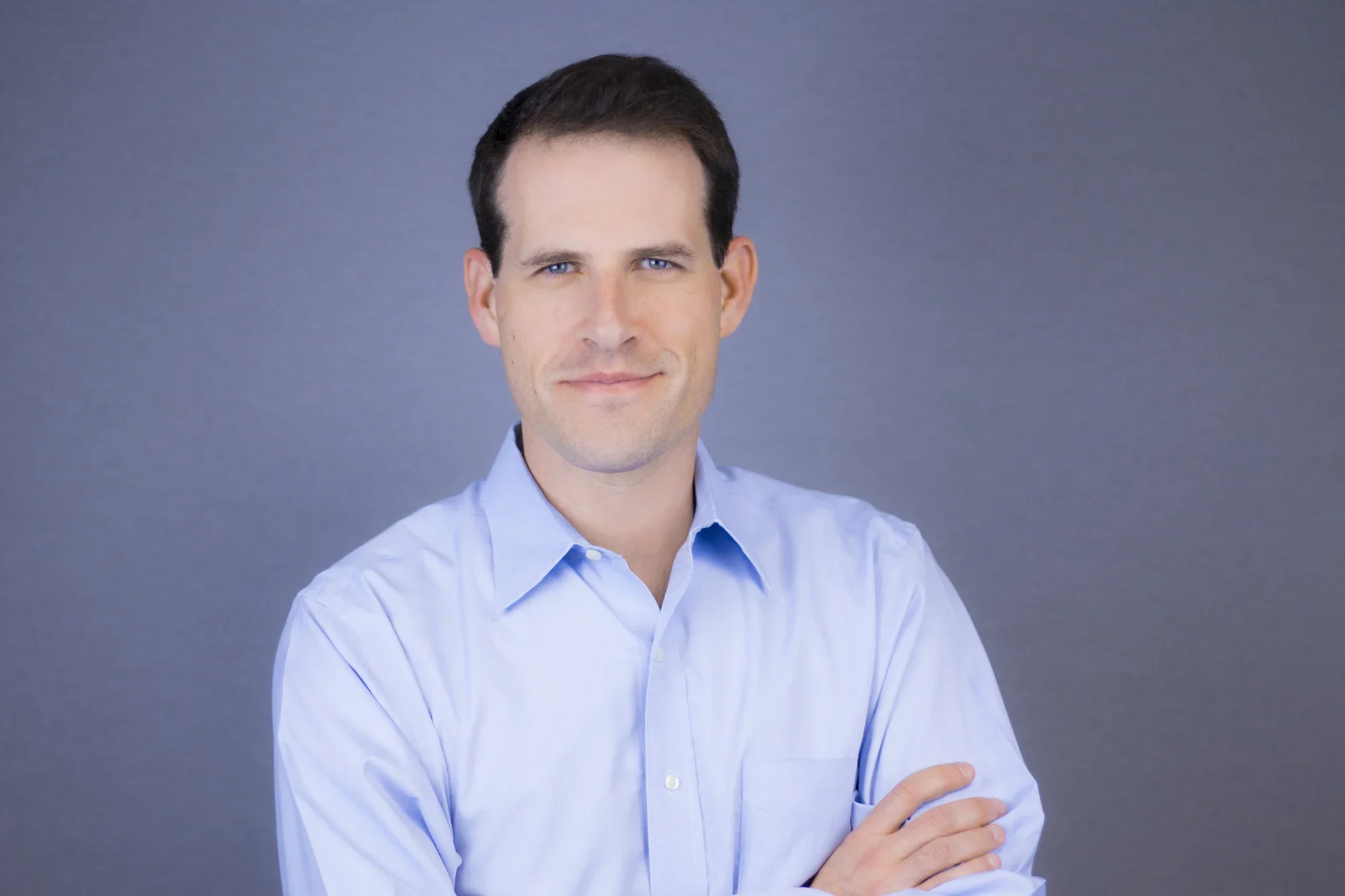
Bryan Leach (Class of 2000, University of Oxford) is the Founder and CEO of Ibotta, a leading performance marketing platform that allows CPG brands to deliver digital promotions.